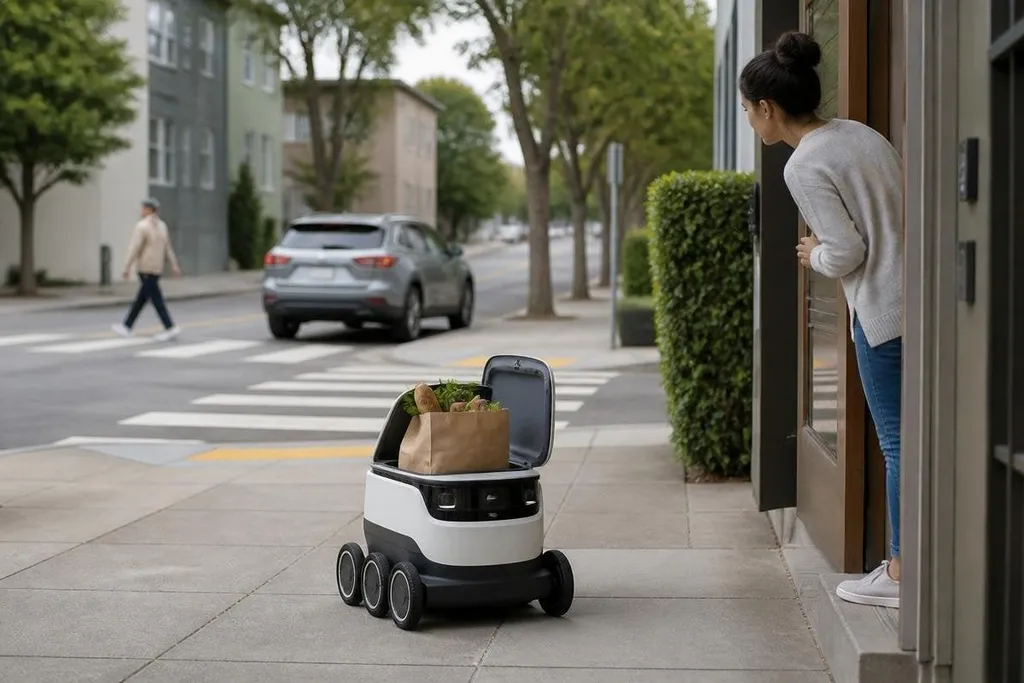
A grocery robot may cover the distance between a store and a home in minutes, but that trip is only one part of the job. The harder test is handling doors, traffic, missing customers, cold food, and a safe handoff without a person stepping in.
- Short routes help: A nearby store gives the robot less road and sidewalk to handle.
- The handoff matters: Food still needs to reach the right person at the right address.
- Proof comes from routine work: One smooth demonstration says little about a full day of orders.
The trip is easier than the order
A delivery robot needs to sense its route, avoid people and objects, stop at crossings, and reach the correct building. A short route reduces travel time, but it doesn't remove those tasks. Even a one-block trip still has to deal with a blocked path or a car parked across a crossing.
Grocery orders add another concern. Items can include glass containers, soft fruit, frozen food, and bags that shift when the robot turns. A useful machine needs a storage area that protects the order while also allowing a customer to collect it without exposing other orders.
Minutes also depend on the starting point. The store must pick and pack the order before the robot leaves. If that work takes longer than the road trip, a faster machine won't make the whole service fast.
The last few metres decide the service
Reaching a building doesn't mean the job is complete. Apartment entrances may need a code, a lift, or help from a resident. Houses bring different problems, including steps, narrow paths, and orders left where rain or passing traffic can reach them.
The customer handoff needs a clear rule. A locked compartment could open through a phone, a code, or another check, but the available evidence here doesn't show which method a real service uses. Without that detail, claims about secure delivery remain unproven.
Handling an empty address, a blocked route, a low battery, or food that has waited too long also needs a set process.
A human operator may need to take over, and that person changes the cost of every delivery.
What a useful test would show
A serious test would measure the whole order rather than the robot's travel speed. It would record how often a person takes control, how many orders arrive intact, and how long customers wait from checkout to handoff.
A grocery shopper needs more than a robot’s travel time. Robot delivery reporting can name the machine, route, test setting, and measured result, so you can judge a fast delivery claim before checking how the route changes.
The test should also separate route conditions. A robot that works on a quiet private path has not shown the same result as one working beside traffic, pedestrians, shop entrances, and apartment doors. The route, weather, operating hours, and number of orders all change the result.
No evidence pack is supplied for this article, so there is no sound basis for naming a delivery time, price, fleet size, or current grocery deployment. That limit matters: the question is possible in principle, but a buying decision needs dated results from a named operator.
What grocery operators should check
Before giving a delivery robot a live route, ask for these details:
- Full order time: Does the clock start at checkout or when the robot leaves the store?
- Human assistance: How many trips need remote help, and what happens when the link fails?
- Food protection: Can the storage area keep separate items secure during movement?
- Customer access: How does the recipient open the compartment, and what happens at an apartment?
- Failed delivery: Where does the order go when nobody answers or the route closes?
- Operating limits: Which roads, weather conditions, and hours are outside the service area?
The practical answer
Robots could deliver groceries in minutes on short, controlled routes. That claim needs a full-order clock and records from normal service, not a travel clip. The first useful number is the share of orders completed without human help; until an operator publishes it, I'd wait before treating minute-scale grocery delivery as a working service.